


“I’m happiest when I’m doing something that I know is good. That’s happiness to me.”
— Happiness, The 1975
My happiest moments in life have been when I’ve known I’m having impact.
For years, this meant spreading good ideas about health and wellbeing. In practice, this meant sitting down with overworked professionals and helping them understand data about their rest and recovery.
Later, I taught helping practitioners about strengths, values, and mindfulness. I loved hearing how my perspective trickled down to their clients, and it felt like useful work.
Now, it no longer does, and I've spent the better part of a year trying to figure out why.
The Problem With Knowing Things
Wellbeing, self-development, and pop psychology have exploded into full-blown industries. Everyone has a hot take, and every algorithm serves you twelve more.
As someone who used to contribute to this pile, I’ve developed an allergy to it. I sometimes feel foolish for thinking I had anything unique to add to the conversation.
My honest reaction to most of it now is, “Well, duh.”
For a while, I thought I had a marketing problem. It turns out I was just bored of hearing myself speak on things I didn’t find interesting anymore—things others had already said better.
That would have been a manageable crisis. But alongside the boredom came a shift in focal length too, which has made this crisis of meaning even stickier.
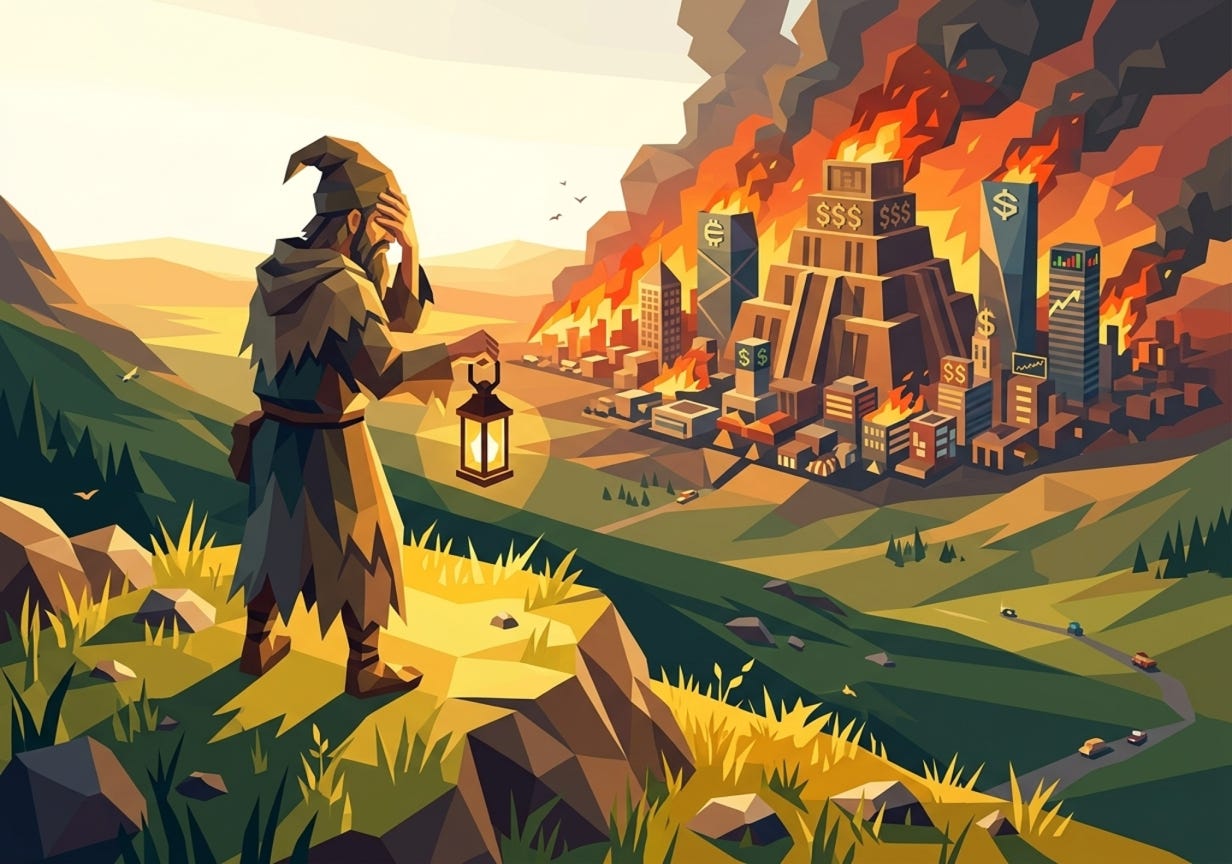
Recently, my perspective has shifted to something more macro. I now see most person-level issues as symptoms of maladies that go beyond the individual or run deeper than they appear.
That’s to say that the average person and their life is fairly fucked up due to shit they’ve been carrying around since childhood, societal conditioning, or broken systems they cannot easily escape.
None of this can be fixed with five-minute mindfulness hacks, and I’m bored of pretending like they can.
An Illustration
I attended a Toastmasters event in Japan recently—mostly to fill the time, and partly because wandering into the wrong room has historically taught me more than going to the right one.
Held in English globally, participation in the club involves delivering talks so that members can develop their public speaking skills. I showed up with zero expectations.
The evening’s talks centered primarily on topics of the speakers’ own choosing, and so everyone’s present challenges came exploding out onto the table.
One woman, joining via Zoom, described her struggle to care for a newborn while attempting to rejoin the workforce. Despite her supportive husband, it was clear things weren’t going smoothly for her.

She ended her speech with an appeal for advice.
My honest thoughts?
"Sorry, sis. You’re fucked.” “You were tricked.” “You were told you could have it all, but they lied to you.”
My mind turned to a time when child rearing was shared within large communities, all before the rise of agriculture shoehorned us into nuclear families with a productivity requirement.1
In other words, the source of her problem predates her. Yet, this poor woman had been gaslit into believing a solution must be within her reach, if only she could find it.
This is how I see most people’s pain now—as rational responses to irrational conditions. As symptoms of broken systems that were never designed for human flourishing.
This perspective, while clarifying, has made me almost completely useless in a professional sense, and to return to my previous roles would feel like trying to clean up a tsunami with a mop.
I miss my former ignorance because, at least back then, I got to feel useful.
“How much time have you got?”
My best work has never happened on a stage or in a newsletter.
It’s happened across a kitchen table, or stretched over hundreds of hours with someone I love, gradually nudging them past the narrow frame of their immediate circumstances until something larger comes into focus.
These are real excerpts from conversations I’ve had with people, ordered from mildest to wackiest:
“There's no reason you can't retire early if you’re tired of your job.”
“No you shouldn’t go to university, despite what your parents are saying.”
“No, you’re not crazy for being unhappy in every 9–5 job you’ve tried.”
“Yes, your doctor was unknowingly poisoning you when he prescribed you that.”
“Yes, your mother is insane.”
“Yes, that telepathic experience was real.”
“Yes, reality is probably an illusion. But no, you’re not allowed to check out early.”
You can't usually open with statements like these. There's an art to knowing when someone is ready to hear something and when they need to discover it in their own time, through their own bruises.
Because that’s what I had to do. Many times.
I almost envy the role of cult leaders who get free license to verbally slap their followers with the truth, free of any faffing around.
It’s only by the grace of God that most people have the kind of brain-gasm that helps them see beyond the scope of their immediate problems and question the structures within which they exist.
When this happened to me, it was a rollercoaster which tore apart my life, booted me overseas, and forced me to a halt as I wrangled a damaged nervous system. You can read more about that fiasco here:
Deep Rest Is Impossible in the West

I'm in the middle of discovering an entirely different way to live—a mode where I let myself be animated by enthusiasm instead of that joyless taskmaster in my head screaming about to-do lists and overdue milestones.
All of this has left me in a state of disillusionment, a bit numb, and unsure what to do to make any sort of contribution now that I see things from the perspective that I do.
AI hasn't helped my sense of relevance either.
Because I'll be honest—I think a thoughtful prompt to a well-trained AI chatbot handles the average wellbeing inquiry well enough and for a lot less than a coach or therapist charges.2
That's probably a good thing for humanity. It's just left me wondering what, exactly, I'm supposed to be adding.
Where That Leaves Me
For the last year, most of what I’ve done is simply be available for those who need an ear or would like to bounce their breakthroughs off someone who “gets it.” These moments are nice, but they are few and far between.
I have a teaching role lined up for next year, which I suspect will give me something solid to hold onto. But in the meantime, I’m doing what I suspect a lot of people do during a crisis of meaning—I’m circling.
Chain smoking. Movie marathons. Sushi trains (hey, at least I’m in Japan). I’m waiting for something worth contributing to to land on my desk.
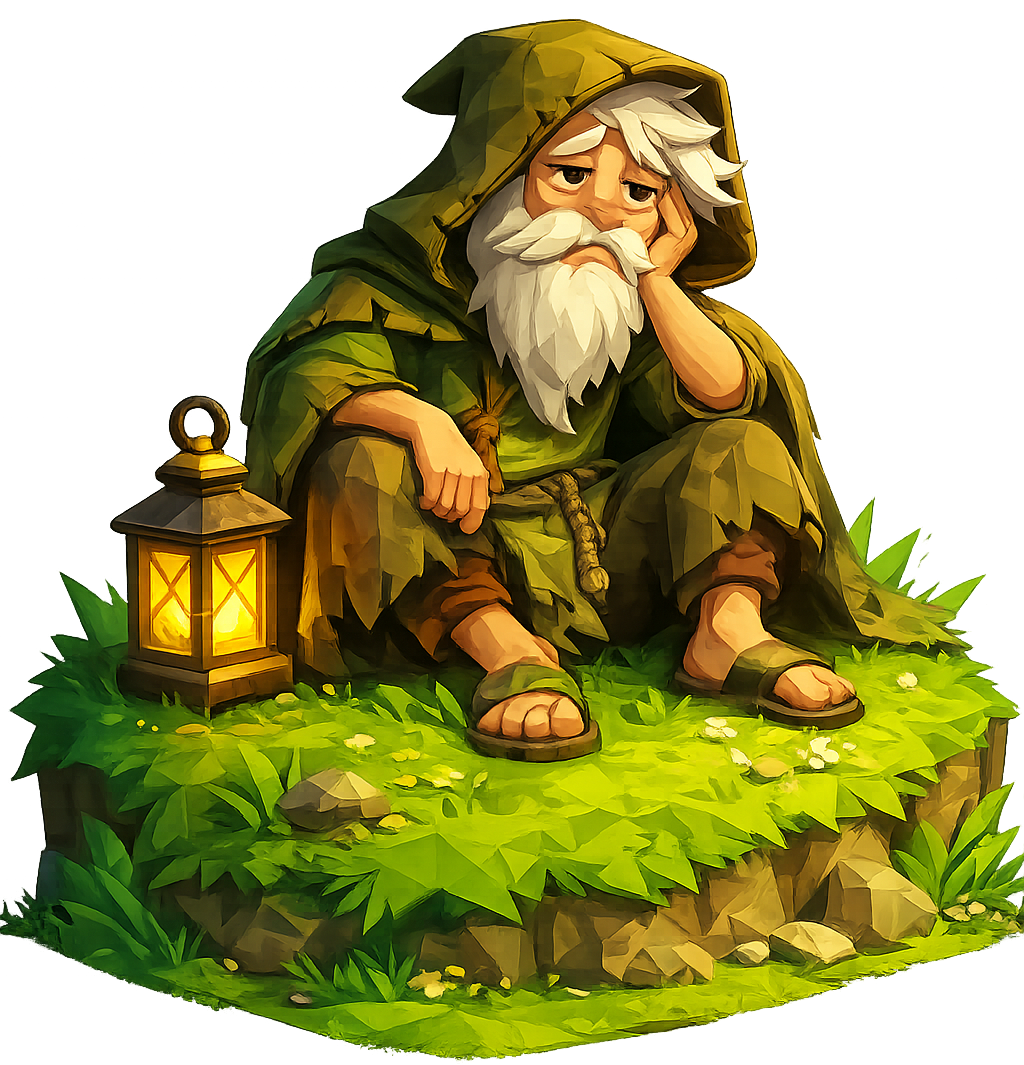
I’m not in despair about it. I’ve been here before, in smaller versions. The fog that follows a shift in perspective usually lifts once you find a new foothold.
But I’d be lying if I said I wasn’t a little lost.
So if you’re standing at a similar altitude—staring at the same bewildering view, too far gone to go back, not far enough to see what’s ahead—you’re not alone up here.
I’ll report back from the other side.
Thanks for reading. If this kind of disoriented honesty is your thing, consider subscribing for the occasional essay like this. I only publish when I have something genuinely interesting to say—not to feed the machine.
Gray, P. (2014). Why children need community. Pathways to Family Wellness. https://pathwaystofamilywellness.org/feature-article/why-children-need-community.html