


Beauty is universally valued. You can tell because nobody checks their reflection in the morning and hopes to have become uglier overnight.
But I believe investing our efforts into beauty tends to have diminishing returns.
Taking reasonable steps to avoid terrified looks from passersby on the street makes good social sense. But beyond this, it would serve many of us to reduce the time, energy, and resources we spend preening and artificially enhancing ourselves.
Because these investments aren’t everybody’s homework.
At best, trying to become more beautiful may be redundant with other strategies as a tool for getting what you want out of life.
At worst, chasing aesthetic beauty may actually hurt these efforts by dampening the magnetism you could achieve via forms of self-mastery that are more aligned with the cards life has dealt you.
And ultimately, when we ponder our life’s wishlist, most of us don’t even want to be beautiful. We want one deeper, more useful trait—one which seems like beauty on the surface but is different.
Read on to learn what that trait is and discover how to embody it.
The Cosmetic Arms Race
Recently, I’ve fallen headfirst into a hyperfixation with strength training.
When I’m not heave-hoing dumbbells around, I’m living vicariously through videos of others doing it while I gnaw away at protein on the couch.
Through this viewing, I’ve learned that many everyday guys are “throwing gear” (that’s steroid speak) despite wide-ranging health risks, which include heart attacks and malfunctioning genitalia.1
Why do they do it?
Some do it because they feel they’re falling behind in the battle for admiration and attention, and steroids seem like an efficient way to turn their luck around.2
This sounded to me like the male version of lip filler. Which brings us to beauty as typically sought by women through botox, plastic surgery, and weight-loss drugs.

So, we have these artificial means for attaining the universally valued ends of masculine and feminine beauty.
What’s interesting is that we seem more obsessed with juicing up in order to level up on this trait of beauty than we are relative to other universally valued traits—like intelligence, creativity, and good humor.
This isn’t to say there aren’t performance-enhancing drug economies for these domains too. Trust me—nicotine, psychedelics, and a few beers can help with all of the above.
But we fear the outcomes of ugliness and flabbiness far more than we fear being dumb, uninspired, or unfunny, pointing to a cultural overvaluing of aesthetic beauty compared to other values.
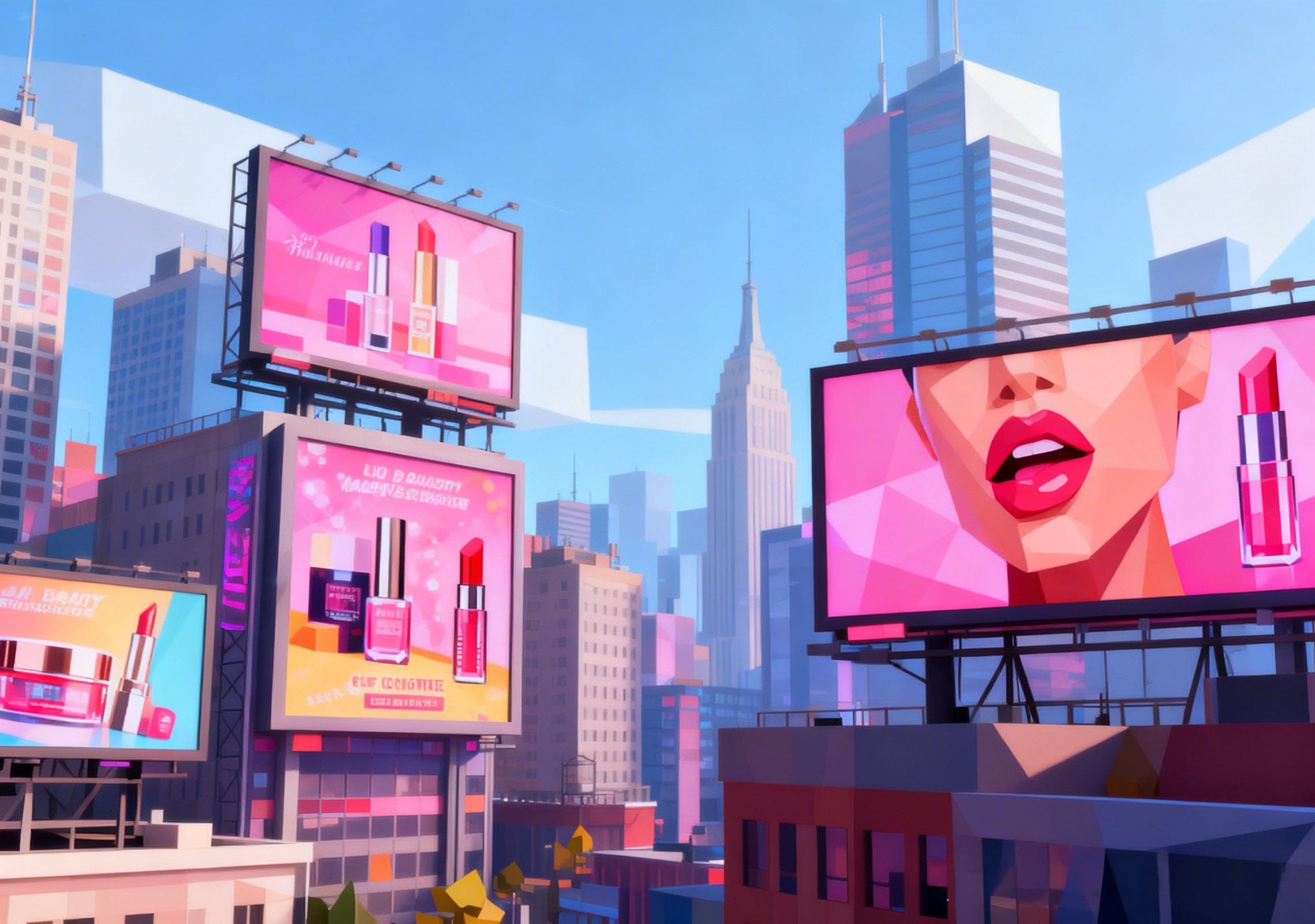
Clearly, we’re biased to give more focus to things we can physically see and touch, and such visually observable phenomena are easier to market to us on billboards.
But I think there’s another reason for this imbalanced focus that’s insanely easy to resolve—simply by discovering that beauty isn’t what you really want.
What you really want is to be attractive—which is not the same as being beautiful.
You’re Training the Wrong Stat
Too many of us conflate beauty with attractiveness.
Increasing your beauty requires that you enhance your aesthetics. Increasing your attractiveness means embodying more of what others value, and beauty is just one thing that others value.
It’s specifically one of 24 things people value—if we’re to take psychology’s leading taxonomy of values to be true.3 This taxonomy includes not only beauty, but traits ranging from creativity and learning ability to humor and zest.
So already, we can see that if you’re aiming to be balanced in your attractiveness, trying to be a bombshell shouldn’t take up more than about 4% of your energy and resources.
But this is still an oversimplification that fails to account for how each person’s path to self-betterment will vary according to their unique DNA-driven blueprint.
In other words, attractiveness arises through mastering a personalized balance of these 24 values—not just by indiscriminately hammering at the beauty stat.
Mastery Is the Real Magnet
Mastery is relevant to everybody’s life path because it’s through mastery that we touch something larger than ourselves. But the specifics of that path will differ greatly for each of us.
For a minority of us, physical beauty is our path to mastery. It’s an arena where we can develop—not as vanity, but as spiritual vocation.
For others, that path runs through wisdom, kindness, or any number of domains that don’t photograph as well.
Your domain for self-mastery may change at different stages of your life. You can think of this like maxing out your interest in one branch of a skill tree, which leads you to switch your focus to another.
But when you conflate beauty with attractiveness, you confuse a journey with a destination. You fail to recognize that it’s the journey to self-mastery in the domain of beauty—not beauty itself—that grants you sustainable attractiveness.
What do I mean by “sustainable attractiveness?”
When you think of the word “attractive,” you should think about it not only as being about drawing in others’ attention, but also about drawing in the things you want.

It’s about abundance. Being a magnet, basically.
And oftentimes, this means drawing in people who can grant you access to the things you want—material things, knowledge, experiences—all because we’re biased to help and give opportunities to more attractive people.45
The term “sustainable attractiveness” speaks to whether you can actually hold onto the things you magnetize into your life through your attractiveness without infinitely struggling or inevitably losing them.
Energetically speaking, this is about building a vessel or container strong enough to hold your desires without collapsing. Psychologically speaking, this is about how you manage your inner life to create synergy with your outer life:
It’s about weeding out the stuff in your psyche that’ll cause you to screw up or self-sabotage when good things come your way.
It’s about healing the hole in your chest that throbs when you lose access to the things or people that usually numb it.
It’s about holding your desires lightly enough to still feel good in the present—with or without others’ attention.
Figuring this stuff out? This is also part of the self-mastery journey.
And it’s because it’s a “journey” that grants access to sustainable attractiveness that there’s likely little point using artificial enhancement as a shortcut.
Sure, you’ll get a bit of a boost.
But if your Rambo-sized guns or BBL open too many doors too soon, you’re at risk of fucking up whatever opportunities come your way because you haven’t gone far enough along the journey of self-mastery to step fully over the threshold.
My Ass Experiment
For most of my twenties, my number-one priority was professional advancement. And for the performance-focused industry I was in, seducing selection panels into hiring me wasn’t going to work.
The consequence was that I didn’t worry much about my appearance.
I focused on developing other branches of the virtue skill tree—like my learning ability, teamwork, and perseverance. The result is that those years of being “mid” never really blocked me from getting the things I wanted.
But now, my priorities are completely unrecognizable.
I’m now busy hammering my glutes in the gym, trying to earn a dumptruck.

Why am I bothering with this all of a sudden?
First, I want to see whether progress comes quickly thanks to my African genes. Because who doesn’t love an easy win?
Second, I’m curious to test the science for myself.
What is the total magnetic pull of an ass that won’t quit? Will it, or won’t it, increase the number of men who approach me, and will they be more inclined to start giving me useful stuff?
It’s not that I have trouble sourcing my own steak dinners and seaside getaways, but this experiment in human nature is one I’m just too curious not to run.
And finally, I’m doing it for the post-workout high, which continues to exceed my expectations the harder I push myself. Because at my core, I’m just a bored junkie chasing healthier ways to have fun.
So, curiosity, curiosity, and pleasure are my motivations.
These motivations feel more sustainable—and more intrinsic—than anything I’d have had access to throughout my 20s.
So, I’m grateful I discovered working out when I did and not a moment sooner when it’s effects wouldn’t have lit me up and afforded me the benefits they do now.
Closing Thoughts
When you’re attractive, life and other people tend to give you more of the things you want. But the fastest path to such magnetism may not require a focus on beauty at all.
Hell, a 30-minute makeup routine might actually slow you down.
It’s the journey of self-mastery—in whatever domain is actually yours—that makes you inherently magnetic enough to get what you want out of life.
At which point beauty becomes redundant. Just a tool, not the point.
Too many people don’t understand this. So everyone’s trying to sculpt themselves into a socially prescribed ideal, which is insane. Because that’s like everyone trying to become Olympic swimmers.
We can’t all do that life path.
Only some of us got assigned that one.
So think carefully about whether trying to look like Kim K or Arnold Schwarzenegger will really get you what you want.
Are you sure you’re not overinvesting your energy in an oversaturated market—or dampening your natural glow? And are you sure there’s not some other underdeveloped dimension of yourself worth focusing on instead?
Because in the end, it’s balanced personal mastery—not beauty alone—that grants you lasting access to life’s goodies.
Thanks for reading. If this post made you rethink your New Year’s resolutions, leave a comment, would’ya?
For more course-corrective nudges and the occasional brag about my PRs at the gym, subscribe to The Aussie Mystic today.
Freud said that pretty much everything any of us ever did was a roundabout effort to smash. If that were true, this tradeoff wouldn’t make much sense at face value—but thankfully, we now know Freud was wrong about a lot of things.
Another point is that men’s muscular heroes are now closer to our plane of reality, which makes it harder to distinguish what’s attainable from what’s fiction; they’re vlogging their morning commutes and coffee runs rather than stopping asteroids and gunning down enemies in the jungle like they used to.
Peterson, C., & Seligman, M. E. P. (2004). Character strengths and virtues: A handbook and classification. American Psychological Association.
Benson, P. L., Karabenick, S. A., & Lerner, R. M. (1976). Pretty pleases: The effects of physical attractiveness, race, and sex on receiving help. Journal of Experimental Social Psychology, 12(5), 409-415.
Dion, K., Berscheid, E., & Walster, E. (1972). What is beautiful is good. Journal of Personality and Social Psychology, 24(3), 285-290.